Take a Listen
Would you rather listen? This article is summarized in the audio section below, and we make some personal picks on what bar we’d choose if we could only have one.
1 Minute Summary
When it comes to your everyday barbell, there are three or four different Olympic barbell options that someone should consider as their “primary.” If you’re just here to find out which one is best for you, here is a quick way to think about it.
- Multi-Purpose Bar: You want to be able to do Olympic movements like the power clean and snatch but also bench, squat, and deadlift. Whether you’re a CrossFitter, performing general strength training, or a beginner, this is a safe option for you where all movements can be accomplished. This is the most popular choice for most.
- Power Bar: No Olympic movements are going to be done and you want an ideal grip for bench, squat, and deadlift. These include a thicker diameter and likely more aggressive knurl.
- Olympic Weightlifting Bar: Improving the Olympic movements (power clean, snatch, clean & jerk) is your primary focus.
- Women’s Bar: The smaller diameter of these bars help women maintain a better grip, which is especially helpful for the Olympic weightlifting movements. Some women think it’s necessary while others do not. These can be found as a multi-purpose or Olympic weightlifting option.
Who Owns What?
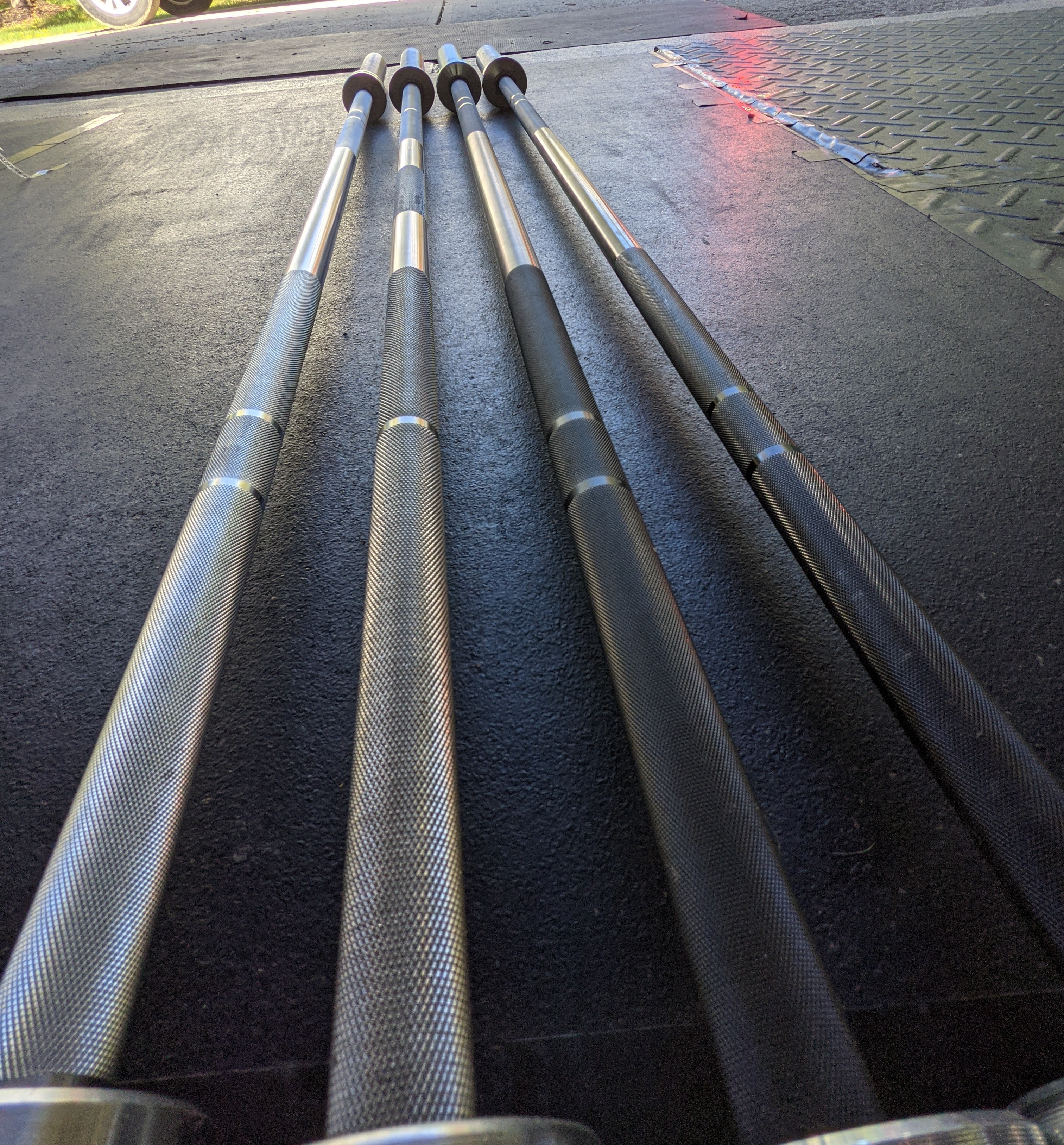
To add some data behind this summary, in September 2021, GGE followers voted on their “primary barbell.” The multi-purpose bar narrowly beat out the power bar as the most popular “primary barbell” that survey responders use.

Overview of the Rest
The remainder of this article will discuss:
The Styles of Standard Olympic Barbells: This barbell guide outlines the Multi-Purpose bar, Power bar, Olympic Weightlifting bar, and Women’s bar in more detail than the summary above. This selection will also reveal a list of “high-value” options to choose from for each type of bar.
What to Avoid?: Unless you find these for free on Craigslist, stay away from bars like these! They are not good long-term buys.
Characteristics of an Olympic Barbell: What is an Olympic barbell? Dimensions and other characteristics are also discussed – overall length, sleeves, shaft, knurling, tensile strength, and bearings or bushings.
Conclusion: Some final remarks.
The Different Styles of Standard Olympic Barbells
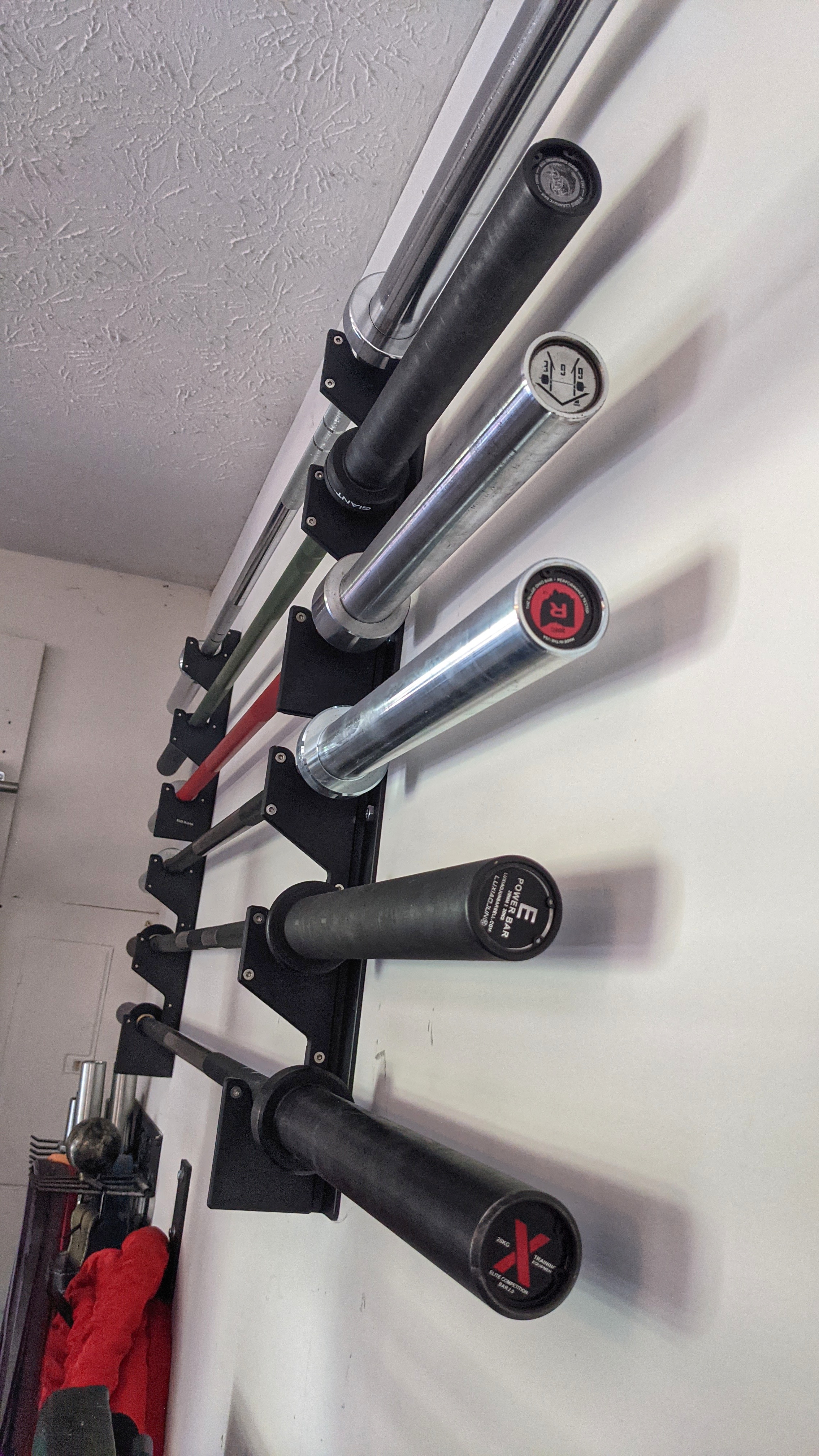
In this section, the primary barbells will be broken down in more detail than the summary above.
Multi-Purpose Bar
The multi-purpose bar is likely the best option for most lifters who don’t label themselves as a type of lifter (Powerlifter, Oly Lifter, etc.). The “average lifter” should most likely choose this option, but it’s a solid selection for many. Other important notes include:
- For men, it’ll include a diameter of 28 or 28.5mm and bushings that’ll help keep the price down. With bushings, the spin will not be so overwhelming and disrupt movements like bench or squat. Some will include a bearing option, though that someone doing CrossFit workouts will appreciate.
- Knurl marks and styles are the lifter’s preference, but if you plan on using this bar for cleans or other front rack positions, you may want to find a multi-purpose bar that does not have a center knurl.
- Typically, multi-purpose bars will have a more passive knurl but are still easy enough to grip. Just note, different coatings (like cerakote or hard chrome) will make a passive knurl even tamer.

- Though most multi-purpose bars will use bushings, they should have enough whip and spin to perform technical lifts such as the snatch and clean.

And, here are a few high-value options for you to consider if going with a multi-purpose bar.
| Name | Company | Notes |
| Ohio Bar | Rogue | Durable, Made in the USA, and includes many finish options. |
| Cross Training Bar 2.0 | Gymway | Smooth, mild knurl, well built and beautiful barbell |
| Sabre | REP | One of only a few bars MP bars with a center knurl |
| E1 Training Bar | LUXIAOJUN | 8 Needle Bearings included so excellent option for those performing many Oly Lifts |
Power Bar
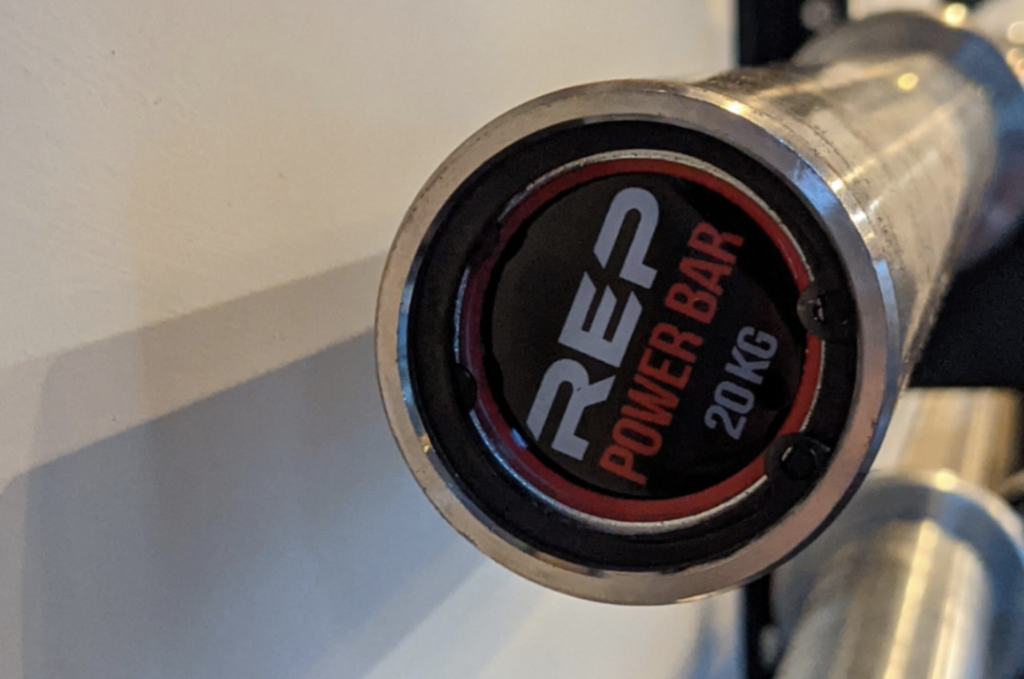
The Power Bar comes with the reputation of being for only powerlifters, but a power bar is a great bar for ‘the big 3’ movements; bench, squat, and deadlift. It can also be a preferred bar for other movements like overhead press and rows that don’t require the bar to spin. For anyone not planning on doing Olympic movements, a power bar should be the number one option.
Other important notes include:
- Will typically have a diameter over 28.5 mm, with most being 29 mm.
- These will typically be “stiffer” than other types of bars and made to handle a lot of weight on a regular basis.
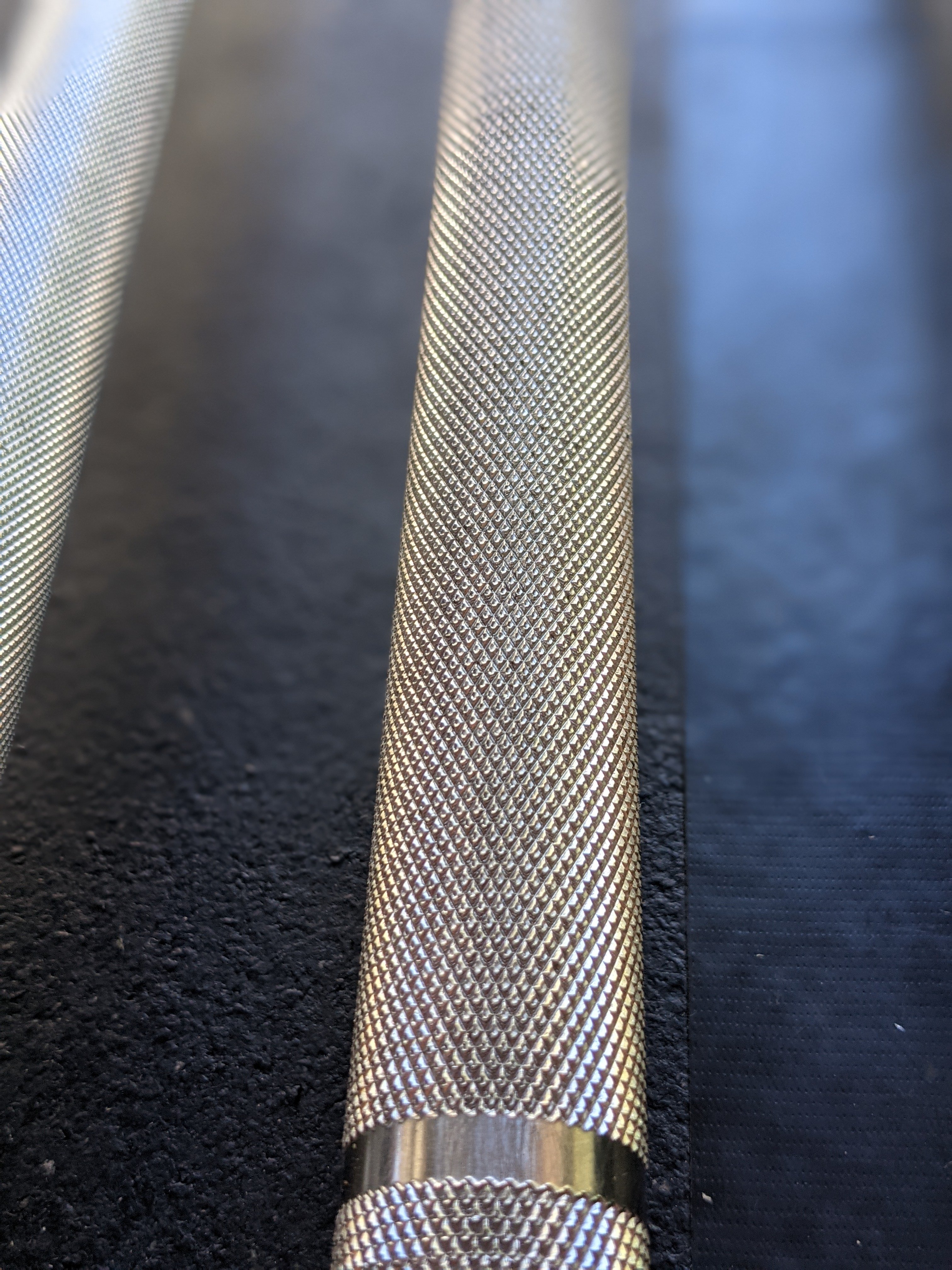
- They are also are known for their thickness and their (often) more aggressive knurling.
- They should include a center knurl for comfort with the back squat.
Some solid home gym options (based on price, durability, and overall performance) include:
| Name | Company | Notes |
| Ohio Power Bar | Rogue | Relatively aggressive knurl, durable, Made in the USA, and includes many finish options. |
| REP Stainless Steel Power Bar V2 | REP | Medium knurl and stainless steel finish that makes an excellent every day bar. |
| Barenaked Power Bar | Bells of Steel | Bare steel finish and likely the best bar you can get for the price. |
Olympic Weightlifting Bar
Barbells made specifically for Olympic weightlifting are going to prioritize barbell spin and whip. Barbell whip is the amount of bend and recoil you get from explosive pulls and contact on the bar. Other important notes include:
- To get that optimum spin, most Olympic weightlifting bars are going to use bearings in the sleeves. More specifically, needle bearings. This will allow the bar to spin freely, but it will increase the price significantly.

- Likely to have a ‘tacky’ grip but not deep-cut knurling.
- A true Olympic Weightlifting Bar will include a center knurl, but there are many “training” options that do not include, since it’s designed for higher rep training.
- With all that spin, this bar is not ideal for every lift. It is made explicitly for the Olympic lifts and can be used for other lifts, but the increase in rotation does create some instability; you can feel this most notably in a standard bench press.
Here are some home gym options, with several being very high-value training options.
| Name | Company | Notes |
| Pyrros Bar | Rogue | IWF Certified, Stainless Steel Shaft, Center Knurl, and a spin designed to please Olympic gold medalist Pyrros Dimas. |
| Training Bar | American Barbell | High value, hard chrome finish, smooth rotation, and with no center knurl, it’s designed for higher rep training. |
| The B.O.S. Bar 2.0 | Bells of Steel | Built for high rep training and those not looking to spend over $300 |
Women’s Bars
Barbells explicitly made for female lifters are to execute lifts where grip plays a significant role (OLY movements). In general training, women often use 28+mm barbells, but some bars are made for women that can help female lifters with smaller hand sizes than male lifters, on average.
- A female bar is going to have a shaft diameter of around 25 mm, which is quite a bit smaller than most bars designed for men.
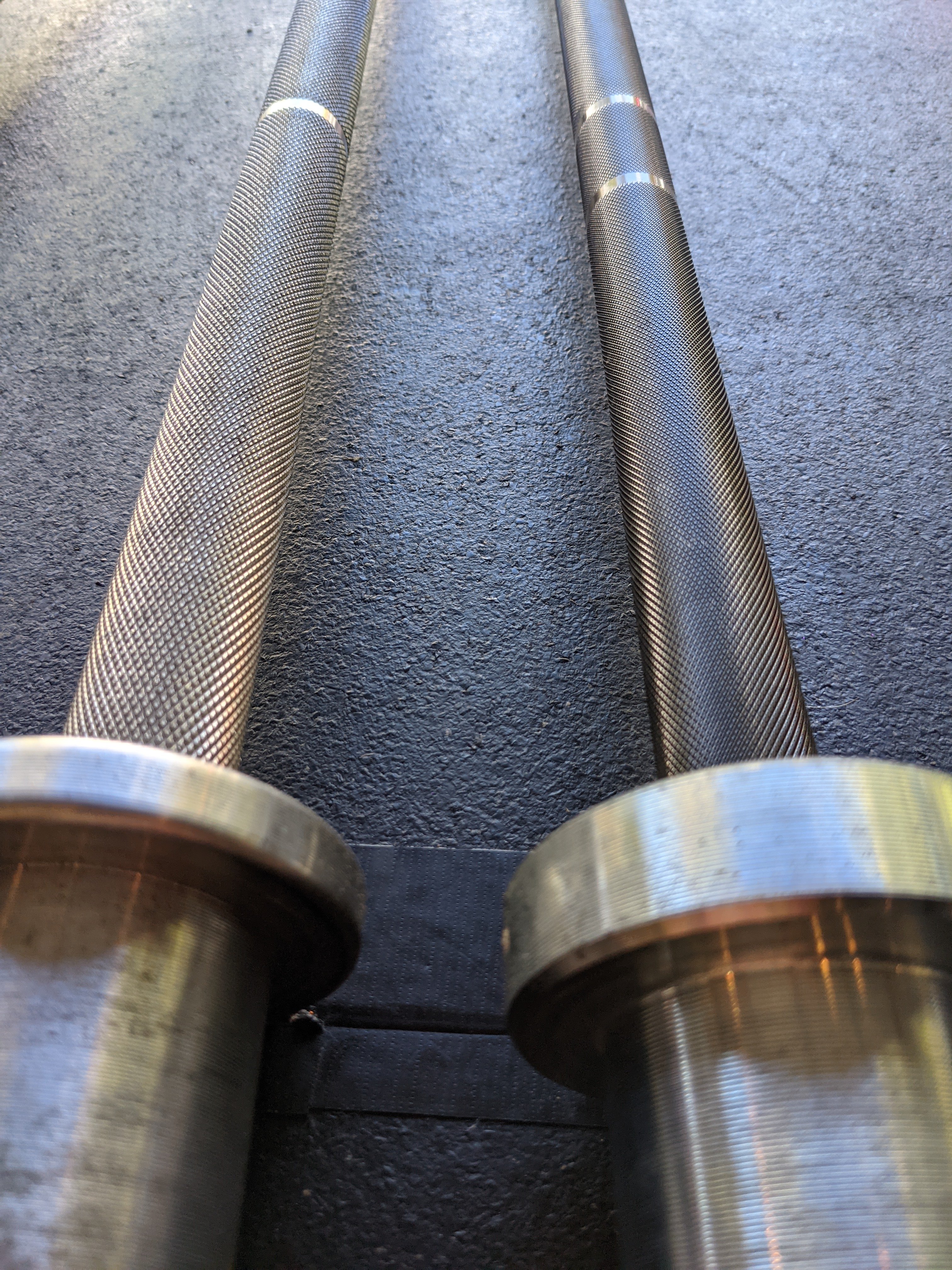
- Sometimes the overall bar length will be slightly shorter than other barbells, but it will still be around 7 ft.
- As far as knurling and knurl marks, it would depend on that bar’s purpose. It follow the same logic as mentioned in the previous bars.
- When it comes to powerlifting, women compete with 29 mm bars.
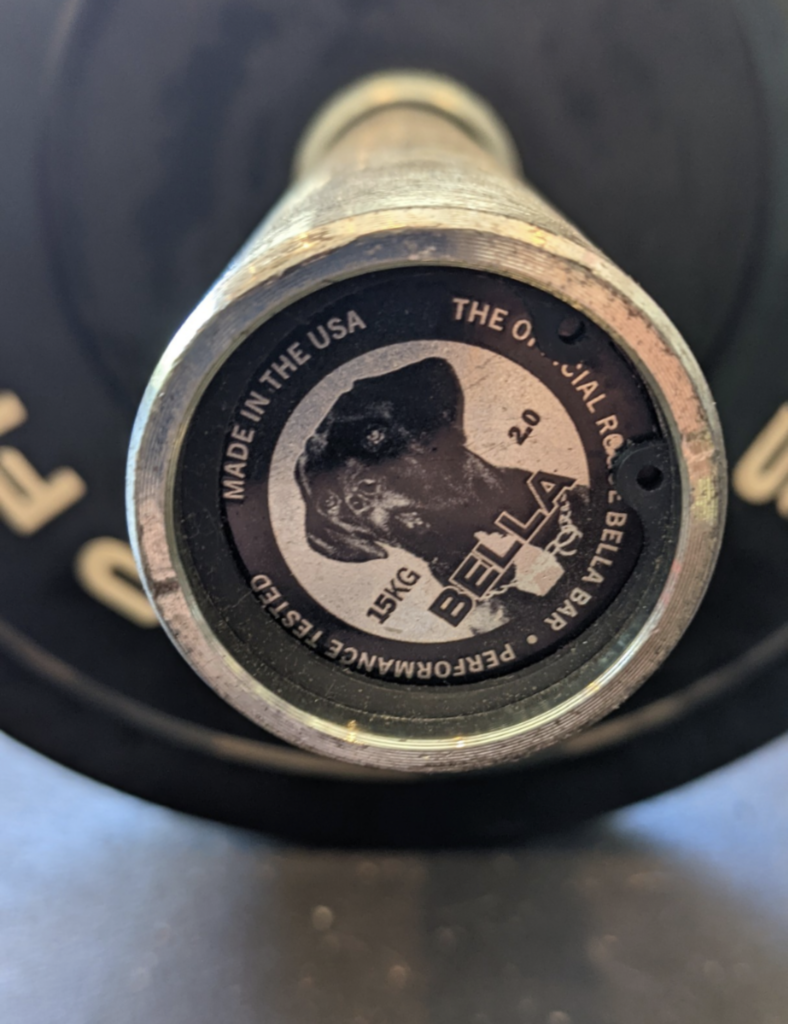
With all of that being said, here are some 25mm options:
| Name | Company | Notes |
| Bella Bar | Rogue | This multi-purpose bar is Durable, Made in the USA, and includes many finish options. |
| Sabre | REP | The 15kg option is a high-value multi-purpose option for around $200. |
| Pyrros | Rogue | Premium Oly Bar offered in 25mm |
Avoid “Non-Olympic Barbells”
If you take strength training seriously, don’t buy the 1″ diameter bars made for 1″ weight plates, also known as “standard barbells.” That may be obvious to the majority of the audience reading, but just in case you were unsure: buy an Olympic-style barbell. Standard bars are shorter, their sleeves do not rotate, unstable, and are only made for a small equipment category.
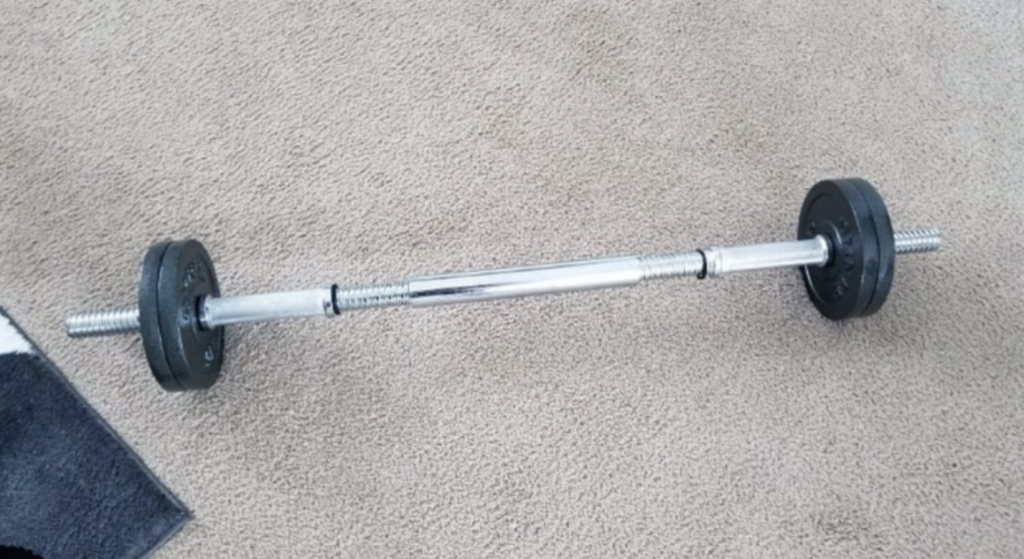
It would be best if you also avoided shorter barbells. You can save yourself some money buying 5 or 6 feet barbells, but those bars will not be fitting onto your squat rack. They will also limit your grip range and require you to buy a standard Olympic-style bar later.
Do the right thing and buy an Olympic bar that will best suit your style of resistance training. The next section will discuss the characteristics of a traditional Olympic barbell.
Characteristics of an Olympic Barbell
So, what is an Olympic bar? They include a length of 7 feet (about 213 cm), sleeve diameter of 2,” a shaft wide enough to be racked, a specific knurl to help with different types of lifts, a tensile strength made to handle a heavy load, and
Length & Weight
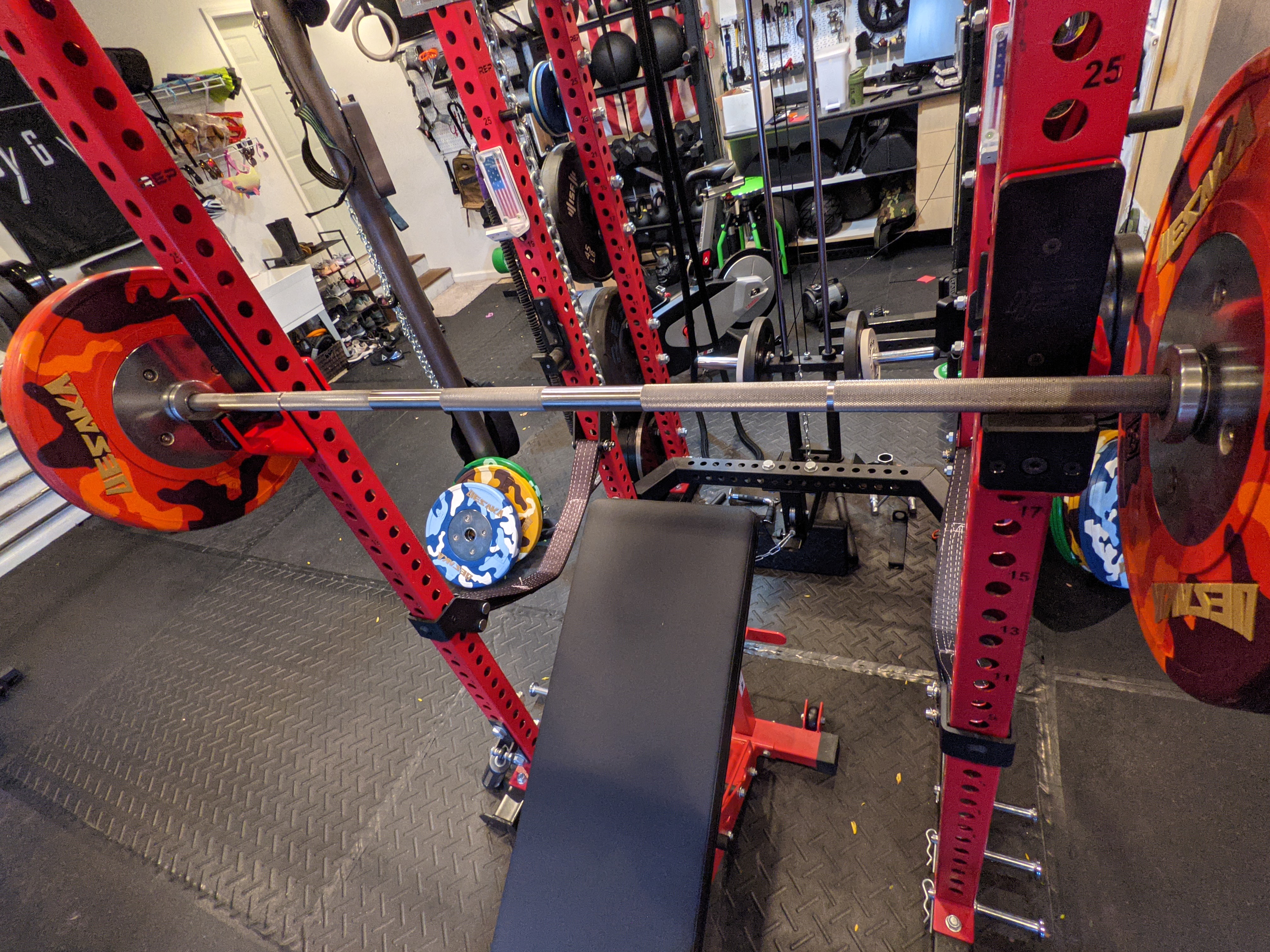
A standard Olympic barbell is going to be around 7ft in length (other “specialty bars, like squat bars, can be up to 8′ in length), frequently men’s bars will be slightly over 7′ and women’s bars may be slightly under.
The weight for traditional Olympic bars only varies slightly. Most will weigh either 45 lbs or 20 kg (44 lbs).
Sleeves
The sleeves on an Olympic barbell will have a diameter of 2″, made for 2″ weight plates, and the loadable sleeve length can vary, but they will be over 1′. A typical barbell will have a loadable sleeve length around 16.” For most, 16″ is ideal.
The most popular female bars only have a loadable sleeve length of about 13″.
Shaft
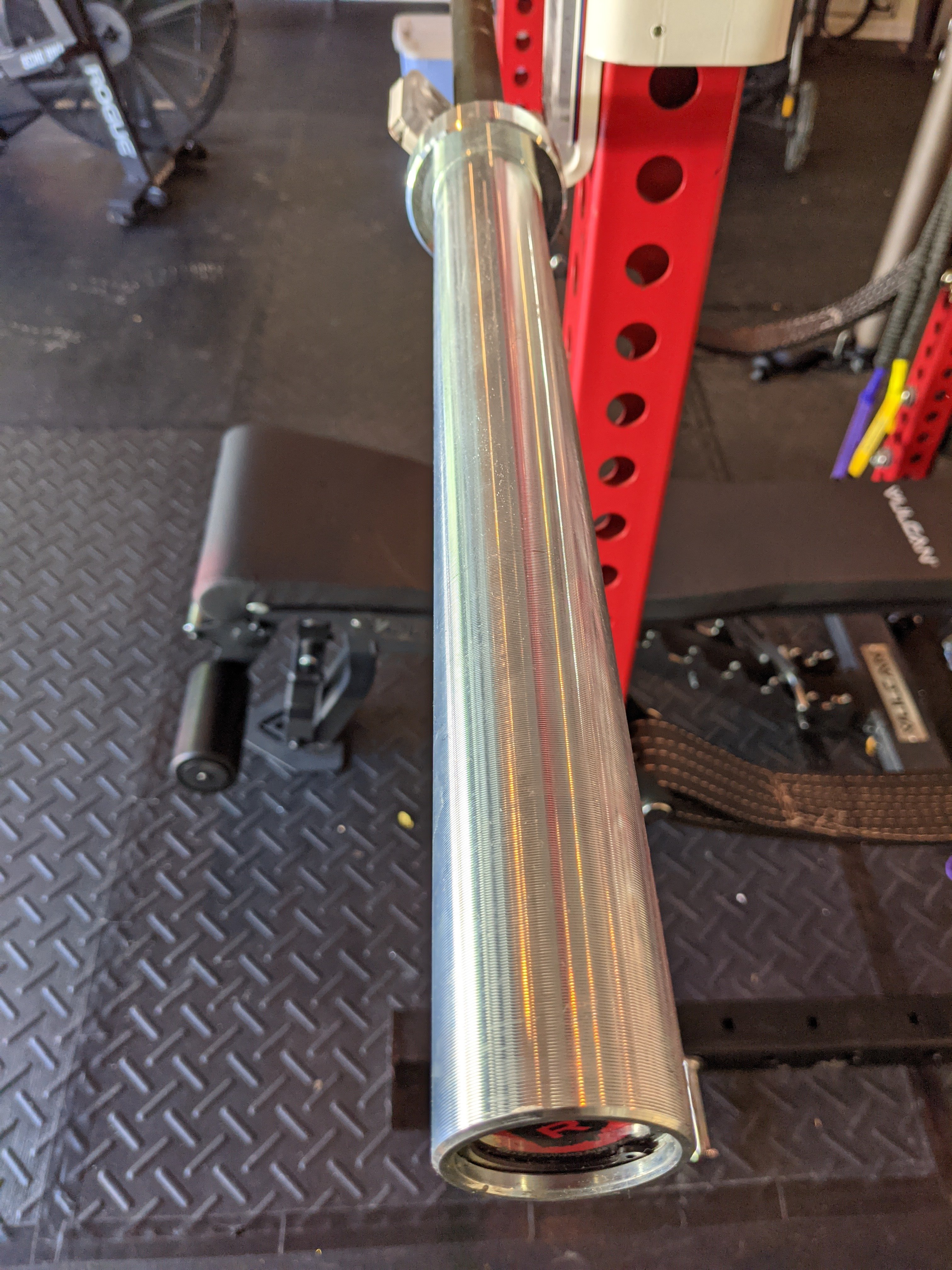
When discussing the barbell shaft, we refer to the area between the sleeves; it’s where you grip the bar. The diameter of the shaft will be in a range from 25mm (women’s bars) all the way up to 29 mm. A thicker bar will have minor bend and whip. On average, 28 and 28.5 mm will be the most common for a multi-purpose bar. Anything thicker is usually designated for power bars.
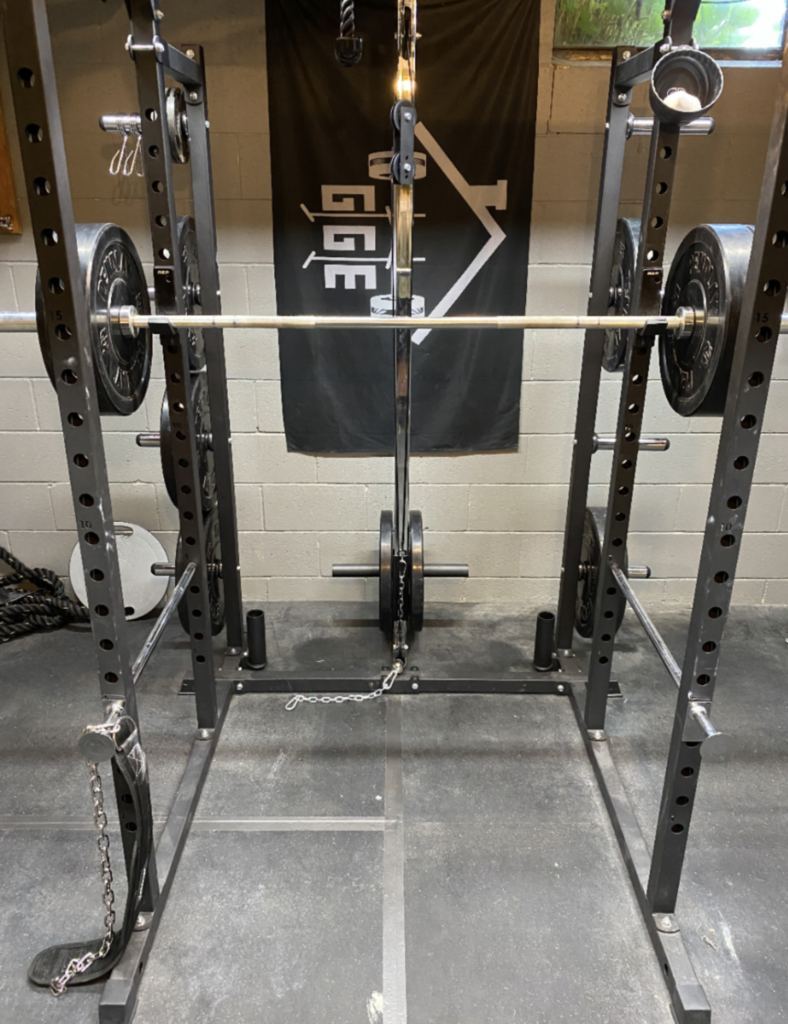
It’s important to note that these will fit on a traditional power rack, as opposed to the “standard” options mentioned above.
Knurling
Knurling is the cuts put into the shaft that creates the grip of the bar. Knurling varies from something passive and smooth to something aggressive that can be very rough. The difference in knurling comes down to personal preference, and they come in different styles (volcano cut, mountain cut, and hill cut).
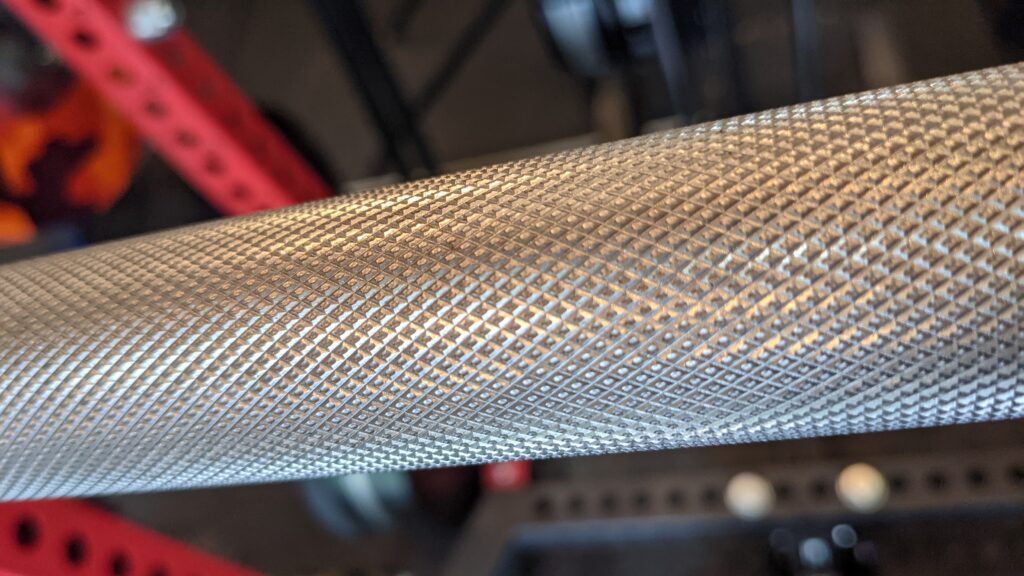
Different bar types will have different knurling patterns. Some will have a center knurling to grip your back during back squats, while others will not have a center knurling to make it more comfortable in a front rack position, which is helpful for many doing large amounts of cleans.
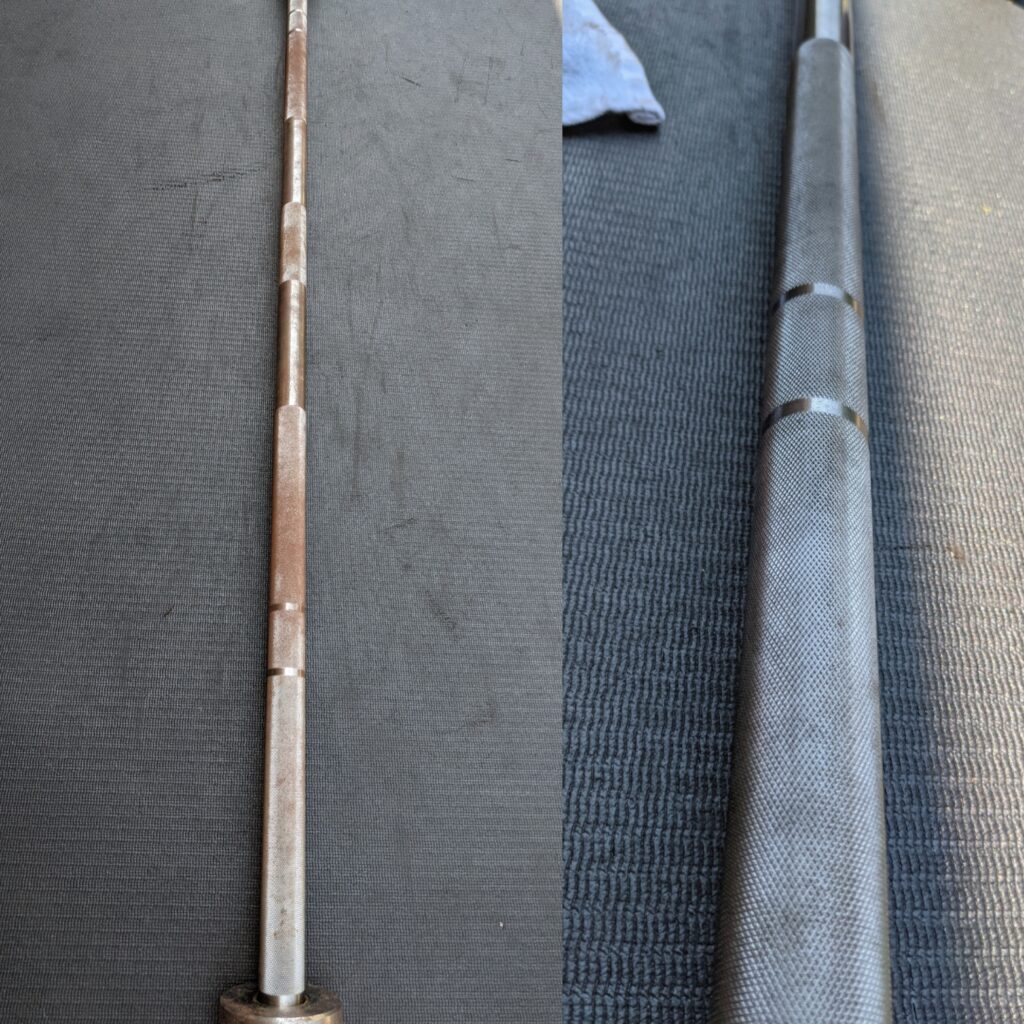
There are also ‘knurling marks’ cut into the bar. These are breaks in the knurling that help with hand placement. The knurling marks vary with the purpose of the bar. There are powerlifting knurling marks and weightlifting knurling marks.

Tensile Strength
Tensile strength is the breaking point for the barbell, and all barbells have one. That being said, if you buy a barbell from a quality company and you aren’t pushing crazy numbers, then this number may not be that important for you. For most of the world’s population, this number doesn’t matter too much, as long as it’s high enough. According to the Performance Resource, “A PSI rating between 170,000 and 190,000 is appropriate for commercial settings.” Therefore, it will also be enough for most in a home gym setting.
In addition, the static hold (weight put on the bar before it breaks down) for some of these bars around 200k psi is about 1,500 lbs. Now, the static hold will give you a nice number in pounds, but it doesn’t tell you what the bar can do when put under the actual strain, but, again, it will be more than strong enough for someone working out in a home gym setting.

Bushings or Bearings?
Bushings and bearings allow the sleeves to spin, with bearings allowing for a smoother flow, which Olympic lifters prefer, but a powerlifter may not.
Bushings typically cost less and will provide less spin, but it is important to note that some bushings are better than others resulting in a bar that spins relatively well. The Ohio bar, for example, uses bushings and has a nice smooth spin.

Typical bearings used in barbells are needle bearings. Needle-bearing barbells use rods laid out in a cylinder sleeve that allows the barbell sleeve to spin along the shaft. Needle-bearing bars spin with less friction, and they will give you a bar with a maximum spin.
Some companies take it a step further, and while most bearing barbells use two bearings, some will use up to 4 per sleeve. The result is a barbell that has optimal spin but with a hefty price tag.
Barbell Finishes
You’ll likely want to get a bar that’s been coated (as opposed to bare steel) to protect from oxidation. Stainless steel is ideal, but black zinc, black oxide, and Cerakote (highlighted below) will all reduce the chances of your barbell rusting significantly over time. They’ll take away a bit of the knurling “feel” though. 88% believe it’s worth paying a bit extra for this layer of protection.

Other Notes
- A good barbell (that’ll last a lifetime if maintained properly) can be purchased for $200 to $300. For most people, there is no need to spend much more than that.
- While there are some cheaper options on the market, Rogue barbells are typically a very safe because of their quality assurance, customer service, warranty, and years of providing solid barbells. With that being said, the “performance” of the bars are similar to what many other suppliers offer.
- Nearly 2x more prefer a bar to have a center knurl on it. Only a handful don’t know what they like better (as opposed to the bench width question above). This is based on a September 2021 Sunday Survey.

- The Hybrid Athletics 360 Barbell Brush has been the best way to maintain and also clean up large areas of rust. With a flexible wrap-around grip, you can get deep into the knurl to clear out whatever may be hiding in there. For bare steel bars, you’ll want to use the option with steel bristles and for those with other coatings, the nylon bristles will be a bit more gentle. You can use the promo code GGE5 to save 5%.
Conclusion
Your lifting style is going to determine the right bar for you. There are a ton of barbells out there, and the vocabulary in their description may make your decision more difficult. Usable, you could end up like the thousands of home gym owners who own too many bars and are still shopping for their next one. Hopefully, this read will guide your search to find a suitable barbell for your gym.
Comments